
Introduction
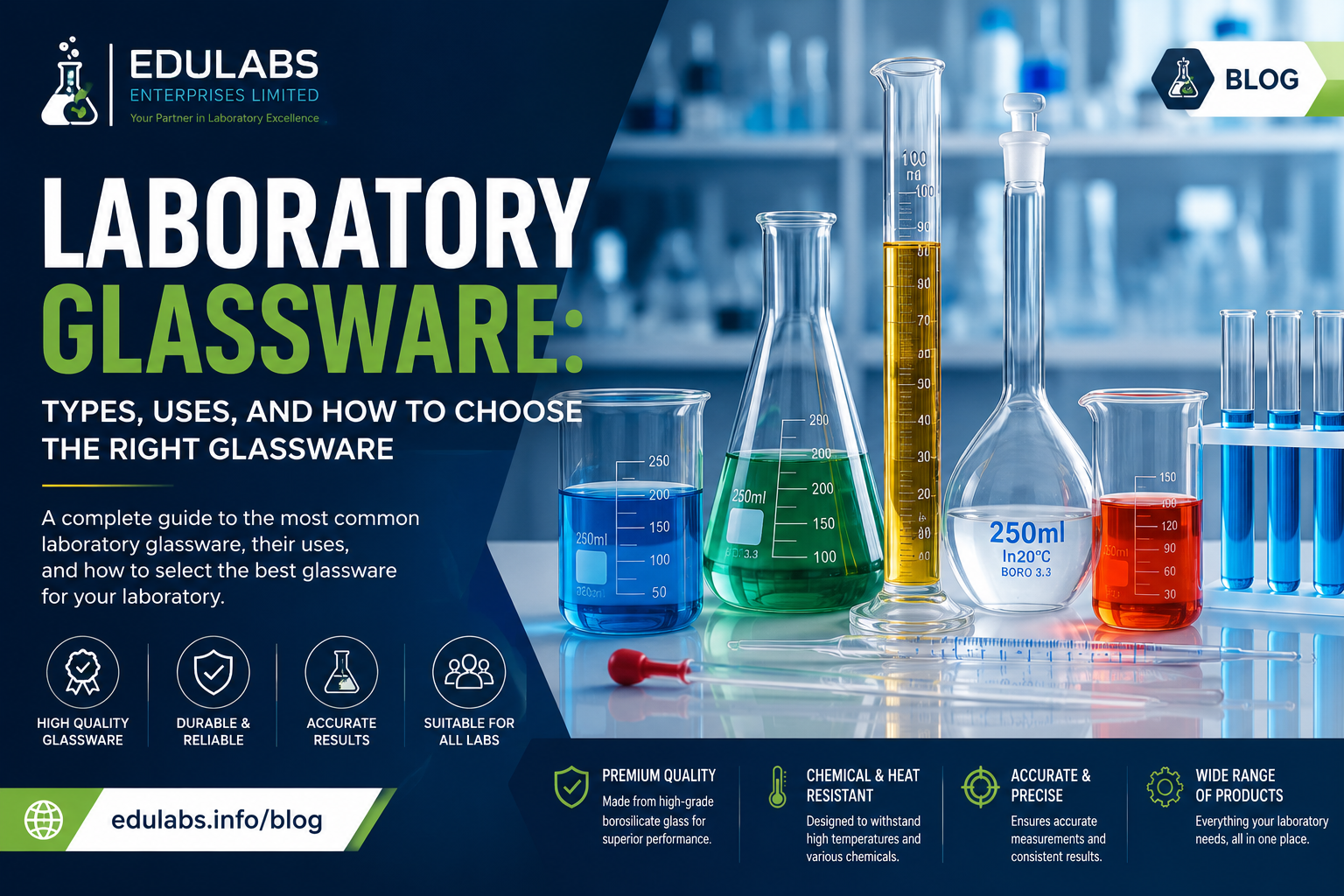
Laboratory glassware is one of the most important components of any scientific laboratory. Whether you work in education, healthcare, research, pharmaceuticals, mining, food testing, or industrial quality control, selecting the right laboratory glassware is essential for accurate experiments and reliable results.
From measuring liquids to mixing chemicals and conducting analytical procedures, each type of glassware has a specific purpose. Understanding these differences helps improve efficiency, accuracy, and laboratory safety.
In this guide, we’ll explore the most common laboratory glassware, their applications, and how to choose the best products for your laboratory.
1. Beakers
Beakers are among the most commonly used laboratory glassware. They are designed for mixing, heating, and holding liquids.
Common Uses
- Mixing solutions
- Heating chemicals
- Preparing samples
- Measuring approximate volumes
2. Erlenmeyer Flasks
Also known as conical flasks, these are ideal for mixing liquids without spilling.
Applications
- Chemical reactions
- Titration
- Culture preparation
- Heating solutions
3. Volumetric Flasks
Volumetric flasks are designed to prepare highly accurate solution volumes.
Used In
- Analytical chemistry
- Standard solution preparation
- Quality control laboratories
4. Graduated Cylinders
Graduated cylinders provide more accurate volume measurements than beakers.
Ideal For
- Measuring liquids
- Laboratory testing
- Chemical preparation
5. Pipettes
Pipettes transfer precise liquid volumes.
Common types include:
- Volumetric Pipettes
- Graduated Pipettes
- Pasteur Pipettes
6. Burettes
Burettes are precision instruments mainly used during titration experiments.
Applications include:
- Acid-base titrations
- Quantitative analysis
- Research laboratories
7. Test Tubes
Test tubes are essential for holding, mixing, and heating small samples.
Used in:
- Biology
- Chemistry
- Medical laboratories
- Education
8. Reagent Bottles
Designed for the safe storage of laboratory chemicals and reagents.
Available in:
- Clear Glass
- Amber Glass
- Screw Cap Bottles
Why Borosilicate Glass?
High-quality laboratory glassware is typically manufactured using borosilicate glass because it offers:
- Excellent chemical resistance
- High thermal shock resistance
- Superior durability
- Accurate scientific performance
- Long service life
Choosing the Right Laboratory Glassware
When selecting laboratory glassware, consider:
- Accuracy requirements
- Chemical compatibility
- Heat resistance
- Capacity
- Laboratory application
- Compliance with laboratory standards
Choosing quality glassware reduces breakage, improves safety, and ensures consistent experimental results.
Industries That Use Laboratory Glassware
Laboratory glassware is widely used in:
- Educational Institutions
- Universities
- Hospitals
- Pharmaceutical Companies
- Research Laboratories
- Mining Laboratories
- Food Testing Laboratories
- Water Testing Laboratories
- Environmental Laboratories
- Industrial Quality Control Laboratories
Why Choose Edulabs Enterprises Limited?
Edulabs Enterprises Limited supplies a comprehensive range of laboratory glassware designed to meet the needs of laboratories across Tanzania.
Our range includes:
- Beakers
- Conical Flasks
- Volumetric Flasks
- Measuring Cylinders
- Pipettes
- Burettes
- Test Tubes
- Reagent Bottles
- Funnels
- Watch Glasses
We are committed to supplying reliable laboratory products that support education, research, healthcare, mining, and industrial laboratories.
Conclusion
Laboratory glassware plays a vital role in scientific accuracy and laboratory efficiency. Investing in high-quality glassware improves reliability, enhances safety, and ensures consistent results for every experiment.
Whether you’re equipping a new laboratory or replacing existing equipment, choosing the right laboratory glassware is a valuable investment in your laboratory’s success.